
What Being Terminally Ill Has Taught Me: Lessons I Might Not Have Otherwise Learned
June 19, 2026
By Andrew E. Kaufman
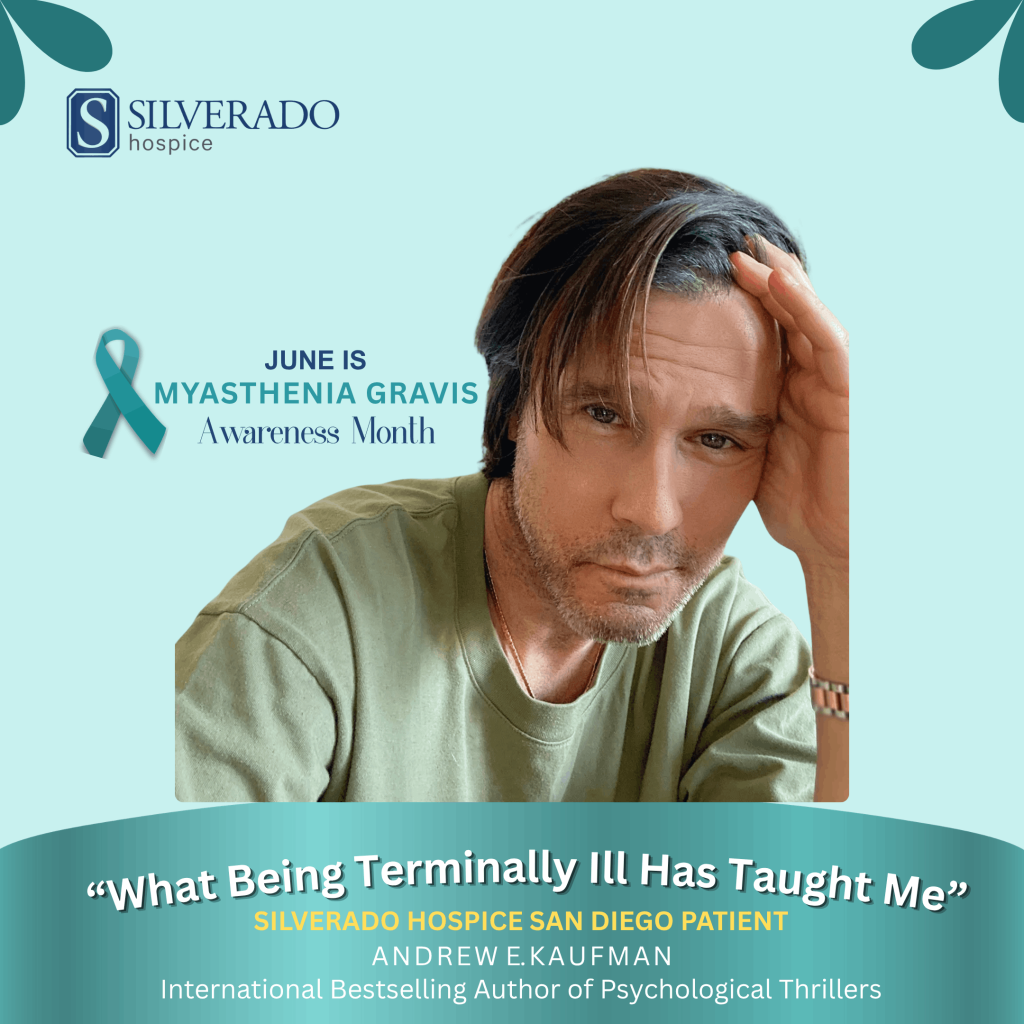
To make my illness my teacher instead of my enemy: to enrich my mind even as it drains my body. Because, despite the many drawbacks of a serious disease, I believe there’s still plenty to learn from being sick. So many things I might not have been aware of had I been well.
Before my disease, I took time for granted, sleepwalking through life, going here, going there but never once stopping to fully absorb everything around me. Now I’ve learned to not just see the world but to truly experience it in every way possible.
I get to talk about how I feel and react honestly without apologizing. With an understanding that time is precious, I know that I’m not doing myself or anyone else favors by appeasing others at a cost to my self-worth.
Everything is impermanent: My terminal prognosis has gifted me with a full and complete understanding that everything is impermanent—that I am impermanent. So, to not appreciate a beautiful thing is to miss an opportunity that may never again come my way.
In the larger scheme, I am not that important: I’m a part of something much bigger than myself. We all are.
My needs are not everyone else’s priority and theirs aren’t mine. There’s a lot of freedom in relinquishing responsibility for other people’s feelings while taking ownership of my own.
I get to choose where I aim my lens: If someone is hurtful toward me, I can make a definitive choice how to react. I can instinctively and spontaneously lash out with anger, or I can understand that doing so will only add another layer of suffering to the situation.
Instead, I can make the choice to acknowledge what I feel, let that feeling go, and not suffer from any personal repercussions. I can also make a definitive decision over how I react to any other adversity. Sometimes, choosing not to react can be an act of kindness toward myself.
There is no better or safer place than the present moment: To become preoccupied with yesterday or tomorrow is to subtract from today. Once today becomes yesterday, it will cease to exist, and whatever is lost may never return. So, I make each moment a stepping stone and move from one to the next.
If something hasn’t happened yet, it doesn’t exist: To create potential scenarios inside my mind is like writing fiction. Creating illusory thoughts about real life. Willful hallucination. So, I’ve made a conscious decision to worry about problems when they become problems because that’s the only time when I’ll have the opportunity to solve them.
Giving up the need to control my life is a wonderful gift that I give to myself. The truth is, there are many things I have no control over—my illness being one of them—so to believe I can change those things is not just an act of self-deception but an act of self-destruction. Once I became aware of this and stopped resisting the things I can’t control, I found it much easier to just let things be.
Sometimes, the act of letting go can be freeing. I can clutch a branch hanging over a river with everything I’ve got until my arms hurt and my fingers turn blue, or I can just let go, indulging in relief from suffering and effortlessly float down the stream with no worries about where it may lead. I may even discover the path leads someplace even better than I’d imagined and that the thing I was worried about never even existed.
It’s better to look at the ignorant and unkind with compassion rather than anger. Something once happened to make them that way, something traumatic. So, seeing the injured child in them is not only the path of least resistance—it also allows me to look beyond myself and provides peace in an otherwise hostile environment. I can relax into compassion instead of being angry and causing myself more pain.
It’s best to discard my need to be self-centric and instead look beyond myself. Cultivating the mind states of kindness, compassion and gratitude are the direct road toward peace.